
Chapter 110 - Vanchinathan
The making of an assassin
This chapter is all from VVS Aiyar’s biography, which details his involvement in Vanchinathan Iyer's assassination of Robert Ashe, the Collector of Tirunelveli.
The biography goes deep into how Vanchinathan, who worked for the Travancore government in Sengottai, was trained to commit this assassination by VVS Aiyar.
There seems to have been two motivations - one, Collector Ashe was behind the cruelty meted out to Chidambaram Pillai in prison. Second, Collector Ashe was behind aggressive proselytizing and forceful conversion in southern Tamil Nadu, which was itself a threat to Indian nationalism.
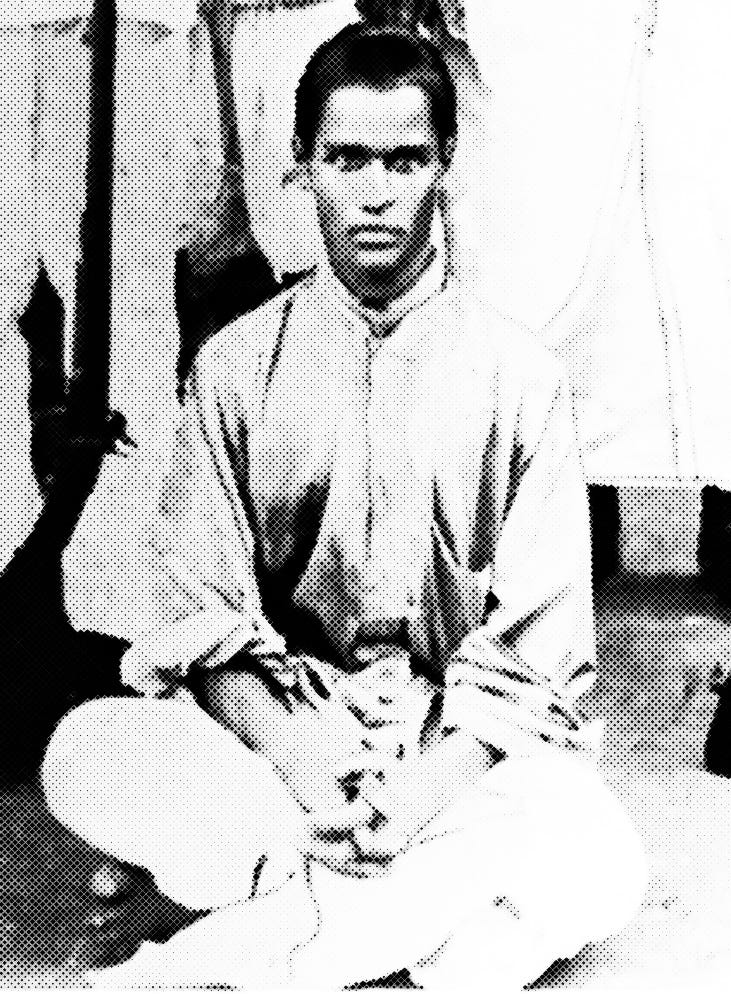
One deviation from fact here — Vanchinathan came to Pondicherry to meet Neelakanta Brahmachari, who was his guru. I’ve made him a composite character with Srinivasachari, because there’s too many people, and I found it hard to meaningfully differentiate him from Srinivasachari — both are older, more cautious men essentially.
Neelakanta Brahmachari was convinced that this assassination would destroy them all, and he preemptively went away to Varanasi, so he wouldn’t be involved.
And yet, somehow, he was the only one who was arrested in connection with the Ashe assassination! VVS Aiyar was still in the crosshairs of the British, but they somehow didn’t pick him up or find that he was connected. I don’t understand how or why this happened.
Vanchinathan
The afternoon sun made the house with the tin roof unbearably hot. Aiyar, all alone, wiped sweat off his brow as he put away books and newspapers and mopped the floor.
This was Dharmalayam, a program he had started. Srinivasachari had found him this modest accommodation and provided moral authority and guidance.
A dozen schoolboys had joined them. Their parents were worried about the influence of their missionary-run schools, and were glad for the influence of Aiyar and Srinivasachari.
They’d all meet soon after dawn to practice silambattam. Some mornings, they’d go for vigorous swims in the sea. After school, they’d meet again and spend time reading newspapers, magazines, and books, several of which were banned in British India, and discuss the news, history, and literature. The little space filled with nationalistic fervour, and Aiyar enjoyed watching the boys grow, make connections, and arrive at similar ideas to his.
It was hard work, with no pay, but Aiyar felt fulfilled—at least in this moment. Yet, as he packed away the books, he couldn’t shake the feeling that he was planting seeds for a future he might never see.
A knock on the door interrupted his thoughts. He looked up to see a tall, strapping young man with intense eyes.
“Namaskaram,” he said, “is Srinivasachari here?”
“Namaste, Vande Mataram. Come inside,” Aiyar said, noting the man’s weary travel bag. “You’ve come from afar?”
“Yes, from Sengottai,” the man said, settling on the mat Aiyar had unrolled for him. “I have leave this week, so I came here.”
Aiyar raised an eyebrow as he handed him a glass of buttermilk. “Two days’ journey for a visit? What brings you here?”
“Srinivasachari is my Guru,” the young man said, his voice full of devotion. “I came to discuss something important.”
“Is that so?” Aiyar said, impressed by his intensity. “Unfortunately, he is away. He’s in Udupi. I’m his friend, Mani Aiyar.”
“I’m Vanchinathan,” the young man said, “I work in the Travancore government. Are you the Mani Aiyar who tricked the authorities all the way from London to Pondicherry?”
Aiyar smiled. “They were slow.” He took the empty tumbler and washed it, and put it away.
“You must be famished.” Aiyar said, “Join me for lunch, let me put away these books.”
“Aren’t these banned?” Vanchinathan asked, picking up The Indian War of Independence and The Indian Sociologist.
“In British India, yes,” Aiyar chuckled, noting that Vanchinathan knew about these and their banning at all, “But here, we’re free to say ‘Death to the British.’”
“Death to the British!” Vanchinathan said eagerly.
Aiyar laughed. “Not so loud!”
At Aiyar’s house, Subbayya, too, brought a friend over for lunch.
Bhagyalakshmi laid out banana leaves for everyone, sharing what simple food she had cooked with their guests.
The newcomer, Nellayyappan, had just returned from visiting Chidambaram Pillai in prison, and was too incensed to stop talking about what he had witnessed.
“He can barely walk,” Nellayyappan said, “And he is burning with a fever, while they are denying him medical care.”
“They really will stop at nothing to ruin him,” Subbayya added.
“They’ve done everything to crush him—undercutting his company, inventing new laws just to keep him from competing. And now, they beat him in prison,” Nellayappan said, anger rising in his voice.
“Can we write to the Collector to improve his conditions?” Aiyar asked.
“The Collector?!” Nellayyappan scoffed, “The Collector is the one responsible for all this. He won’t be satisfied till he is dead!”
“Who, the Collector?” Aiyar joked.
“Shush, Mani,” Subbayya interjected, “You and your talk of killing Europeans. What will this new boy think?”
